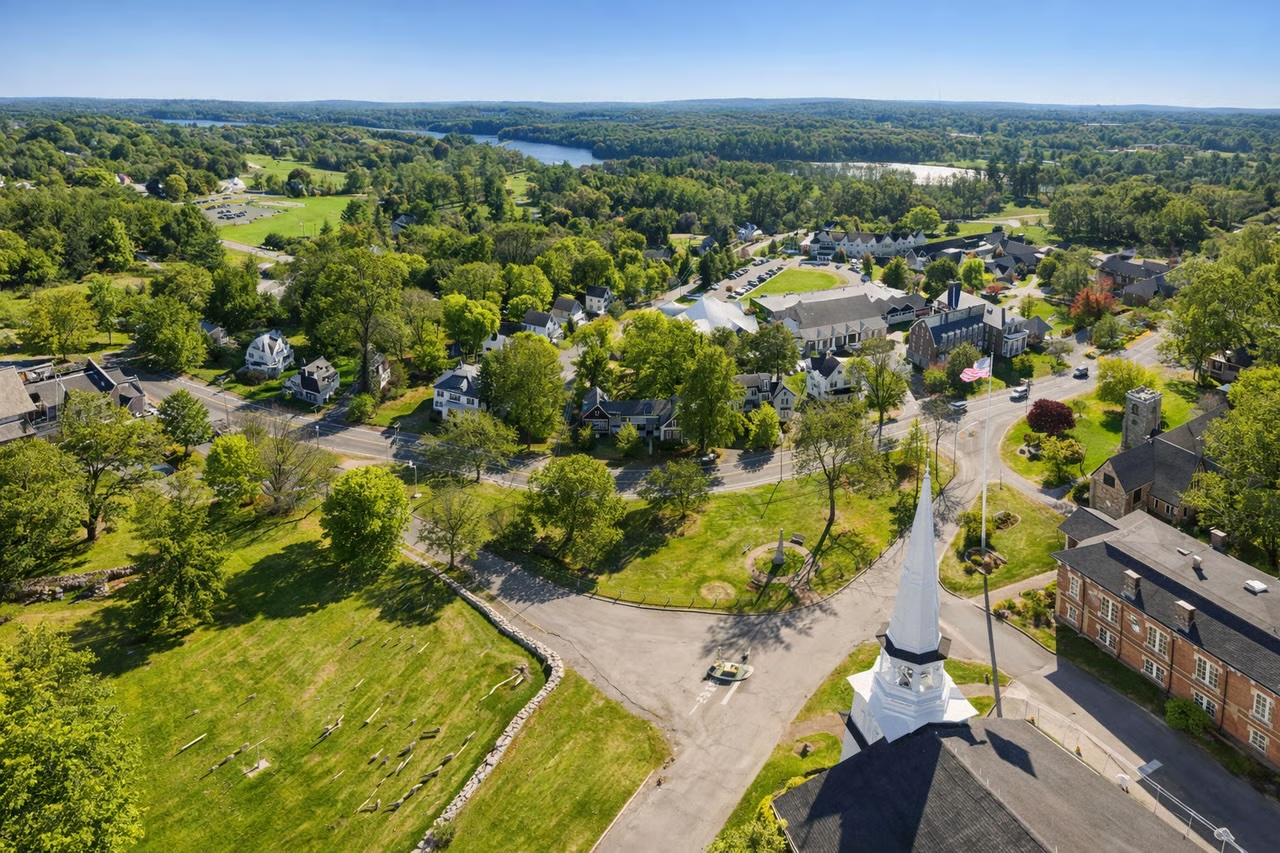
CommunityScale worked with the Town of Southborough and its Affordable Housing Trust to update Southborough‘s Housing Production Plan. The Planning Board and Select Board adopted it unanimously on July 14, 2025, and the Massachusetts Executive Office of Housing and Livable Communities approved it later that year. It is the town’s fourth plan in the series, following 2009, 2015, and 2020.
Southborough had made real progress since the last plan, rezoning downtown in 2021 and adopting MBTA Communities multi-family districts in 2024. What the town lacked was an updated read on how much housing it needs and which of those tools will actually deliver it.
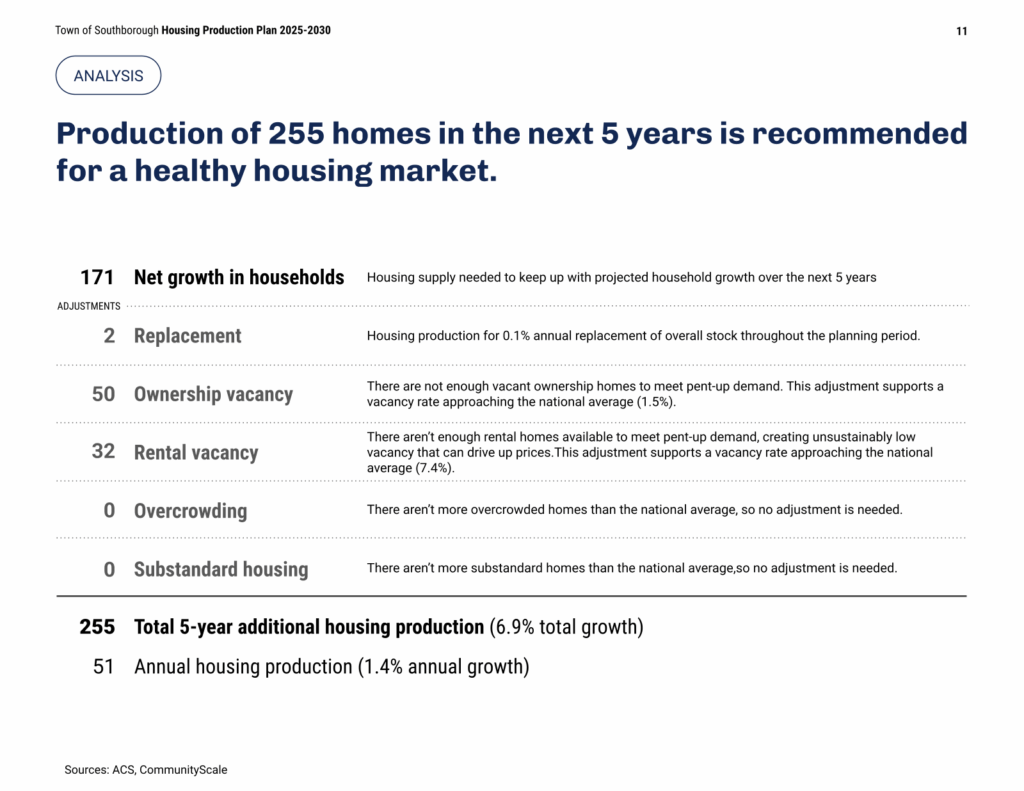
255 homes over five years
Household growth alone accounts for 171 homes at Southborough’s recent 1.15 percent annual growth rate. On top of that the plan proposes adding 50 homes to bring ownership vacancy toward the national average, 32 for rental vacancy, and 2 for stock replacement. The total is 255 homes, or 51 a year, of which 28 need to count toward the Subsidized Housing Inventory to carry the town from 9.94 percent to the 10 percent threshold for 40B safe harbor.
The typical Southborough home sold for $922,176 as of March 2025, more than $200,000 above what a median-income household can afford without becoming cost-burdened. Some 976 households are already cost-burdened, spending more than 30 percent of income on housing; 373 of those spend more than half. Vacancy is very low in both tenures, and the stock is overwhelmingly detached single-family homes with three or more bedrooms.
Southborough’s largest population gains since 2010 have been adults aged 20 to 34 and adults over 65, two groups that may want some of the same things: smaller homes to start in or downsize to. We estimate 585 senior households of one or two people currently occupy homes with three or more bedrooms, which at a 1 percent annual relocation rate implies demand for about 29 downsizing homes over the plan period.
Strategies to meet production targets and improve affordability
The plan highlights strategies for the Town to pursue, with estimated impact of each:
- Accessory dwelling units. Using production rates from places that legalized ADUs years ago, Southborough can expect 3 to 4 a year.
- MBTA Communities overlay. The adopted districts carry capacity for 828 homes, 658 of them net new, with a 10 percent affordability requirement at 80 percent AMI.
- The age-restricted cap. Town bylaws cap age-restricted housing at 7 percent of the stock, or 213 homes. With 208 already built or permitted, the town is five homes from the ceiling and should remove or raise it.
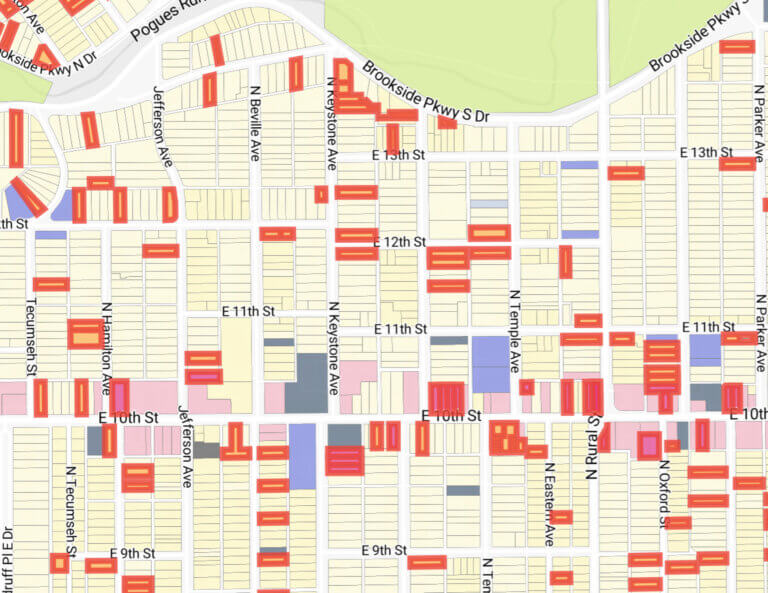
- Route 9 sites. We identified dozens of parcels within 500 feet of Route 9, where land is worth more than the structures on it and which are not conservation land or currently residential uses.
- Wastewater capacity. Water and sewer constraints are the binding limit along Route 9, and the plan recommends continued analysis to increase capacity, potentially through a joint planning grant with Westborough and Shrewsbury.
The plan also highlights preservation as an affordability strategy. We identified 191 single-family homes assessed at or below $483,500, the price attainable to a Southborough family at 80 percent AMI, and narrowed that to 31 homes last purchased at least 30 years ago as the clearest candidates for naturally occurring affordable housing preservation.
The plan also maps Southborough’s route to Housing Choice Community designation, which would unlock a state grant program the town is not currently eligible for.