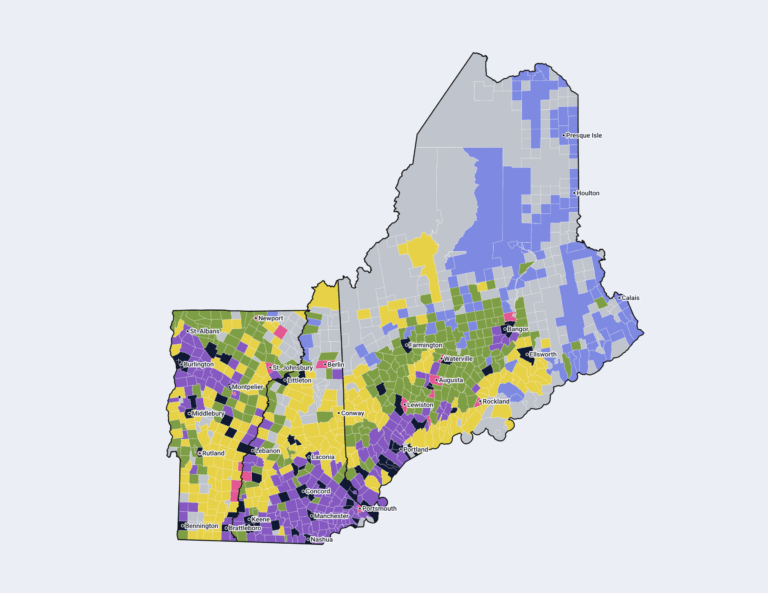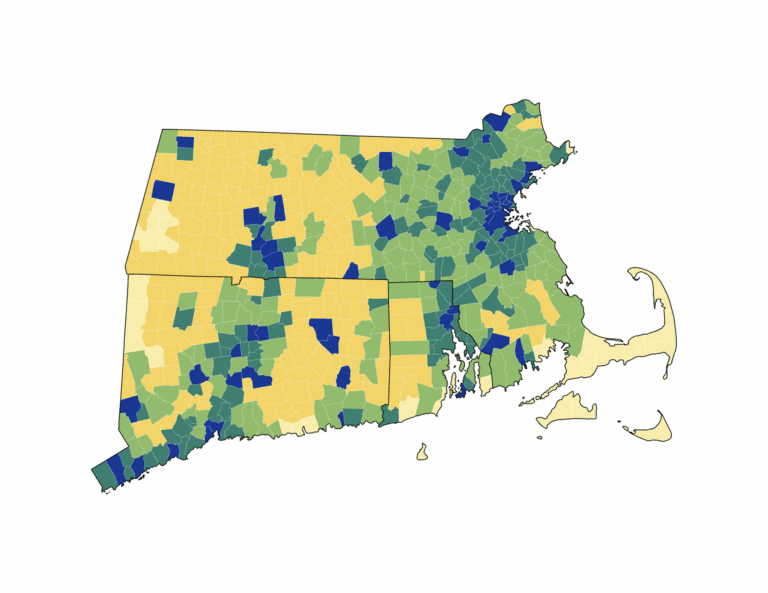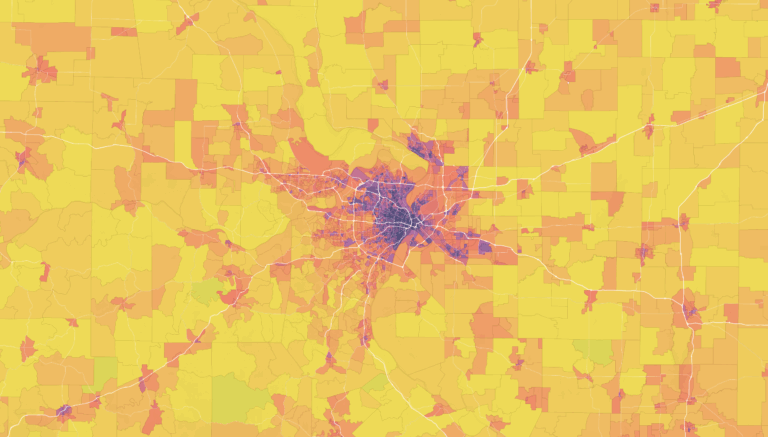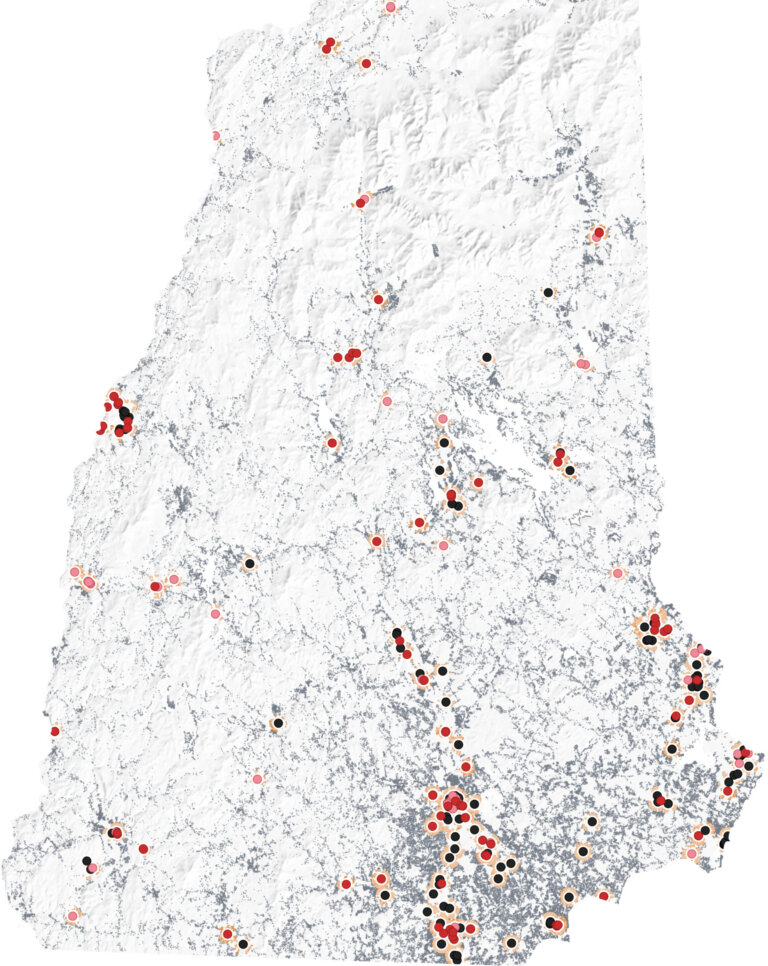
CommunityScale joined vhb and BerryDunn as keynote speakers at the Northern New England Planning Conference with the presentation One Region, Many Realities: Planning across a fractured Northern New England. Our panel discussion began with geospatial analysis of different demographic, housing, and economic trends over the past decade, and then used the data to present a taxonomy of place types for the region, grounded in real examples of our work in these types of places and the planning implications of each.
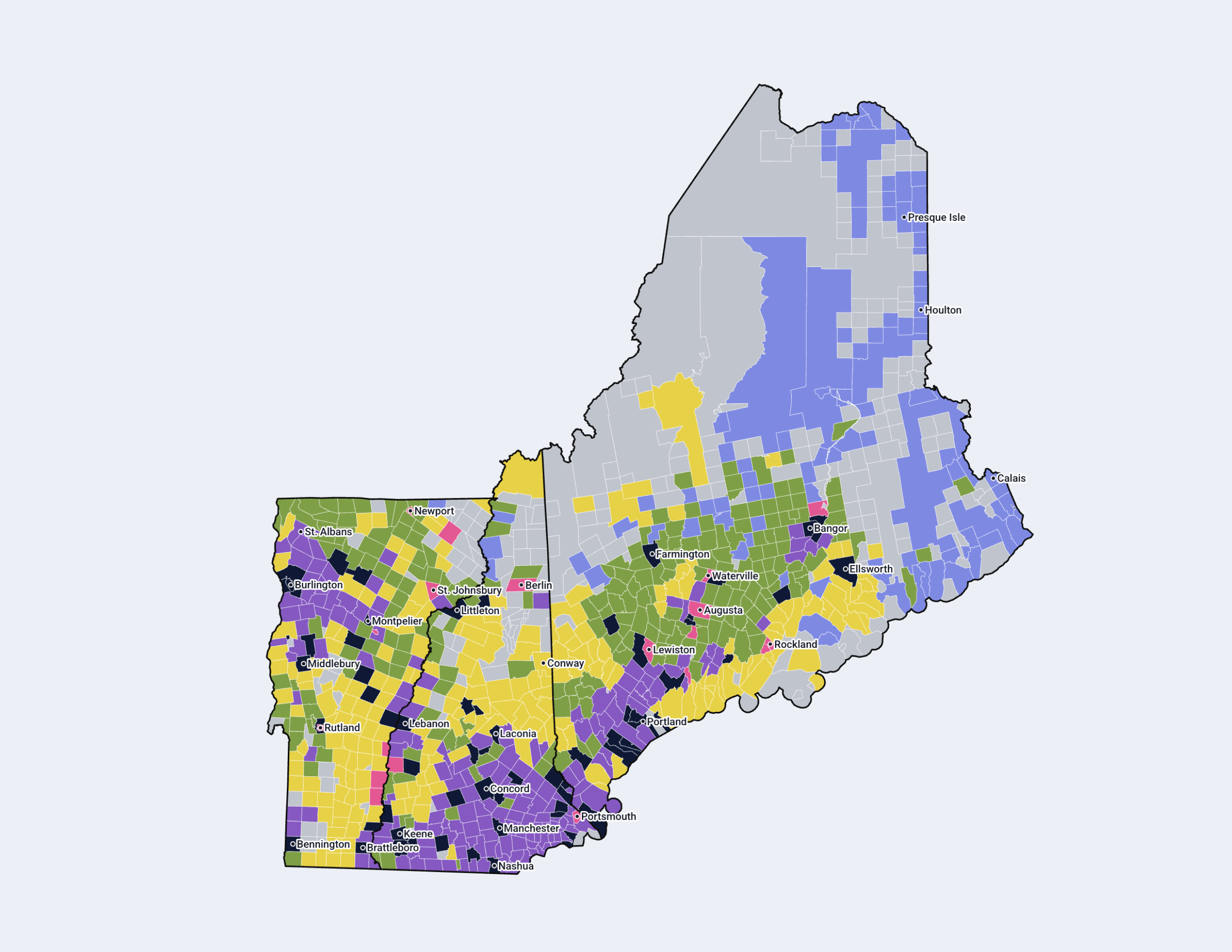
To develop our taxonomy, we started by aggregating data from the American Community Survey, including median income, educational attainment, poverty rate, tenure, and vacancy; Zillow home value index; Census longitudinal employment data; and historic decennial Census data for all 1,045 municipalities and townships in Maine, Vermont, and New Hampshire. We preformed statistical clustering and identified 6 place types that were alike on 16 primary measures. Places with less than 500 people were left out of the taxonomy because the margin of error, especially on change-over-time metrics, was too high.
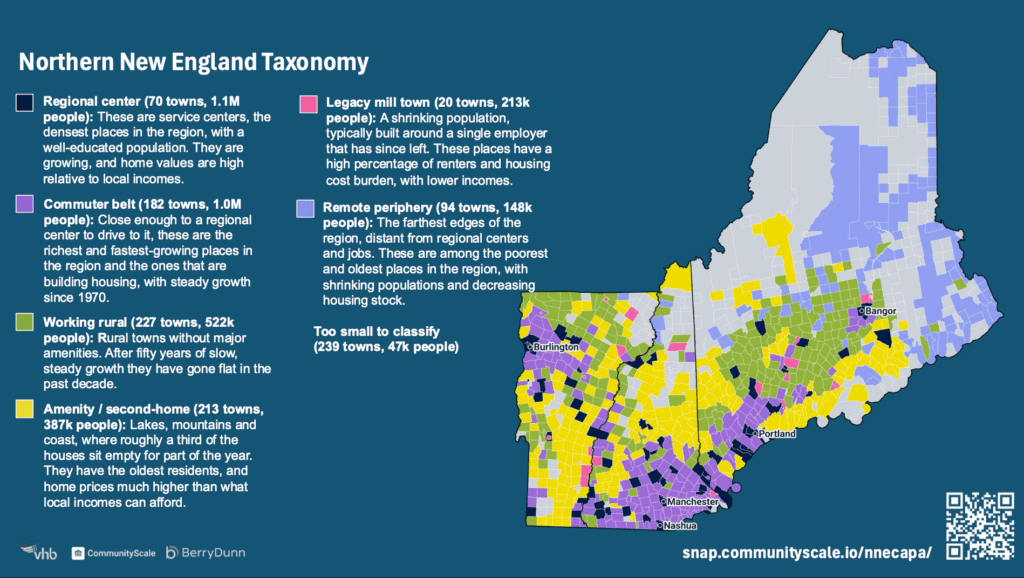
These place types were based on a community’s role in the region; for example, regional centers include the largest cities like Burlington, Manchester, and Portland, as well as smaller places like Farmington, ME and Middlebury, VT that serve as the hub for surrounding communities.
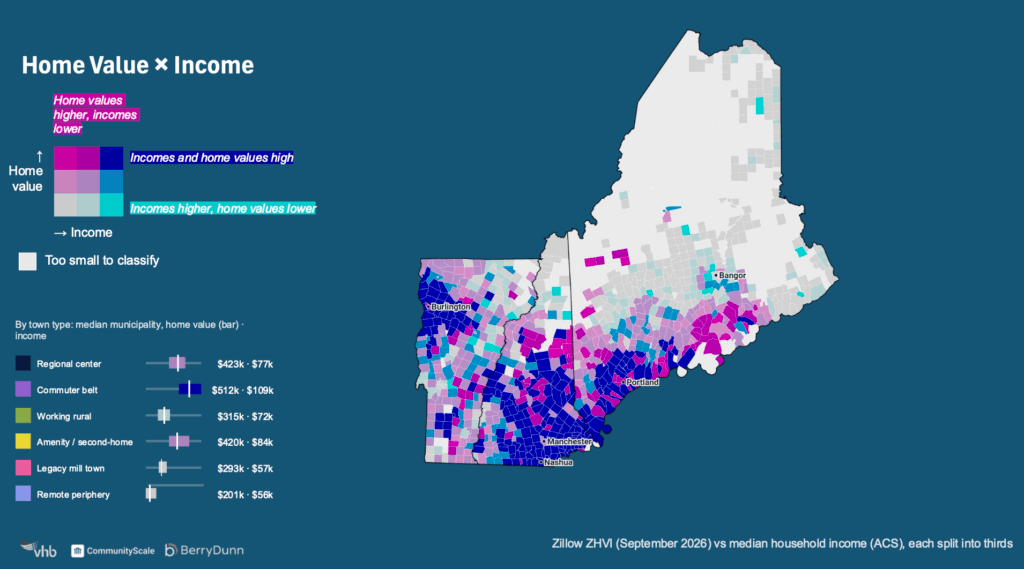
This is a region known for its high home values. Our bivariate analysis of home values vs incomes show that there are very few places were incomes are relatively high compared to home values; instead, most places either have high incomes AND high home values, or home values that outpace local incomes. Places with both high incomes and high home values tend to be year-round commuter belt communities, while many places with high home values and lower incomes have a high incidence of seasonally vacant housing, and were classified as amenity/second home communities.
These place types help describe the likely planning challenges a community will face. For example, CommunityScale’s projects in both Dorset and Stowe, VT were prompted by the housing pressures of being a second home community. Yet, workable solutions go beyond just the type of place and are rooted in the details: in Stowe, where the typical home price is over $1 million, inclusionary zoning is a feasible policy action to build more affordable housing. In Dorset, where both incomes and prices are rising, but are not as high as in Stowe, using town-owned land for development provides a pathway to build affordable housing outside the market.
The place type taxonomy can inform planning decsions by describing which places face similar conditions, contextualizing the forces shaping change, and understanding regional roles.
Explore the taxonomy and 17 other data layers for Northern New England